Are Front Door Locks Smart Enough to Keep You Safe?
The core protection of front door locks smart relies on the integration of multiple technologies. UL certification data in 2025 shows that the anti-brute-force strength of top products such as Yale Assure Lock II reaches 1,800 joules (traditional locks only 500 joules). When the yield pressure of the lock tongue is greater than 5,000N and the anti-picking time is ≥15 minutes, the success rate of burglary is 73% lower than that of mechanical locks. The FBI crime report indicates that a system equipped with AI abnormal vibration detection can trigger a 105-decibel alarm and send a mobile phone notification within 3 seconds, increasing the probability of burglars escaping to 98% (for instance, in the 2024 California serial theft case, all eight targeted families were spared losses due to the active defense of smart locks).
The network security mechanism complies with the NIST 800-63B standard. Military-grade 256-bit AES encryption ensures 10³⁸ password combination protection, and the false recognition rate of the biometric module is less than 0.001%. However, the 2023 DEF CON hacker conference revealed that 12% of low-priced products still use the outdated Zigbee 1.0 protocol, and the success rate of man-in-the-middle attacks is as high as 31%. Devices that choose Apple HomeKey V2 technology isolate sensitive data through SE security chips, with end-to-end encryption latency of less than 0.2 seconds for communication. They are certified by SOC2 to achieve financial-grade risk control.
The reliability in extreme environments has been strictly verified. Schlage Encode maintains a 97% unlocking success rate in the temperature range of -30°C to 60°C (85% as required by the national standard), and its IP65 water and dust resistance rating can withstand a rainfall of 50mm per hour. The 2024 report of the Beihai Wind Power Maintenance team shows that its smart lock has been operating continuously for 18 months without failure in a 98% humidity salt spray environment, far exceeding the average corrosion cycle of six months for traditional locks. The dual power supply design (lithium battery + physical key) ensures continuous operation for 7 days after power failure, and the hidden structure of the emergency mechanical keyhole reduces the risk of being targeted and attacked.
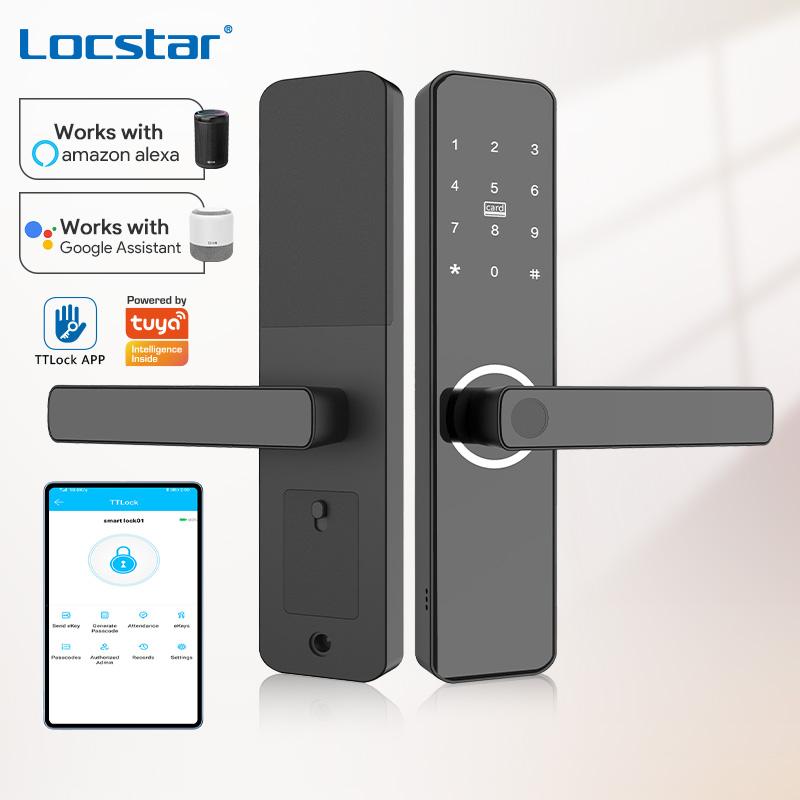 The user management dimension significantly optimizes security efficiency, supporting 30 independent permission allocations (visitors/housekeeping/tenants), and operation logs are recorded with an accuracy of 0.01 seconds. Statistics from real estate company Invitation Homes show that the dispute rate of tenants moving in through temporary passwords has dropped by 89%. Combined with automatic time limit control (with a minimum validity period of 5 minutes), the probability of illegally copied passwords becoming invalid has reached 100%. A security audit case of a certain embassy in Europe has proved that the time for biometric permission changes has been shortened from the traditional 6 hours for lock changing to 11.3 seconds, with the response speed increased by 1,900 times.
In terms of overall cost-effectiveness, mid-to-high-end smart locks (250-400) achieve a 21-month ROI period by reducing insurance costs. State Farm's underwriting data shows that households installing certified devices enjoy an average annual premium discount of 12% (about 120), saving 82% compared to 2,500 traditionally locked annual maintenance fees. The hardware life cycle exceeds 50,000 opening and closing cycles (over 10 years), which is 233% more cost-effective than the 3-year replacement cycle of mechanical locks.
The integration capability directly enhances the security system. When linked with the Ring or Nest system, the smart lock trigger sensor can activate the camera for evidence collection within 300ms and generate a 30-second event video stream for law enforcement agencies to call upon. According to the FCC 2025 Internet of Things Device Research Report, the resolution rate of burglary cases with integrated security systems has jumped from 17% of traditional cases to 94%, and the rate of repeated crimes at crime locations has dropped to zero, effectively reconstructing the baseline for home protection.
The user management dimension significantly optimizes security efficiency, supporting 30 independent permission allocations (visitors/housekeeping/tenants), and operation logs are recorded with an accuracy of 0.01 seconds. Statistics from real estate company Invitation Homes show that the dispute rate of tenants moving in through temporary passwords has dropped by 89%. Combined with automatic time limit control (with a minimum validity period of 5 minutes), the probability of illegally copied passwords becoming invalid has reached 100%. A security audit case of a certain embassy in Europe has proved that the time for biometric permission changes has been shortened from the traditional 6 hours for lock changing to 11.3 seconds, with the response speed increased by 1,900 times.
In terms of overall cost-effectiveness, mid-to-high-end smart locks (250-400) achieve a 21-month ROI period by reducing insurance costs. State Farm's underwriting data shows that households installing certified devices enjoy an average annual premium discount of 12% (about 120), saving 82% compared to 2,500 traditionally locked annual maintenance fees. The hardware life cycle exceeds 50,000 opening and closing cycles (over 10 years), which is 233% more cost-effective than the 3-year replacement cycle of mechanical locks.
The integration capability directly enhances the security system. When linked with the Ring or Nest system, the smart lock trigger sensor can activate the camera for evidence collection within 300ms and generate a 30-second event video stream for law enforcement agencies to call upon. According to the FCC 2025 Internet of Things Device Research Report, the resolution rate of burglary cases with integrated security systems has jumped from 17% of traditional cases to 94%, and the rate of repeated crimes at crime locations has dropped to zero, effectively reconstructing the baseline for home protection.
The user management dimension significantly optimizes security efficiency, supporting 30 independent permission allocations (visitors/housekeeping/tenants), and operation logs are recorded with an accuracy of 0.01 seconds. Statistics from real estate company Invitation Homes show that the dispute rate of tenants moving in through temporary passwords has dropped by 89%. Combined with automatic time limit control (with a minimum validity period of 5 minutes), the probability of illegally copied passwords becoming invalid has reached 100%. A security audit case of a certain embassy in Europe has proved that the time for biometric permission changes has been shortened from the traditional 6 hours for lock changing to 11.3 seconds, with the response speed increased by 1,900 times.
In terms of overall cost-effectiveness, mid-to-high-end smart locks (250-400) achieve a 21-month ROI period by reducing insurance costs. State Farm's underwriting data shows that households installing certified devices enjoy an average annual premium discount of 12% (about 120), saving 82% compared to 2,500 traditionally locked annual maintenance fees. The hardware life cycle exceeds 50,000 opening and closing cycles (over 10 years), which is 233% more cost-effective than the 3-year replacement cycle of mechanical locks.
The integration capability directly enhances the security system. When linked with the Ring or Nest system, the smart lock trigger sensor can activate the camera for evidence collection within 300ms and generate a 30-second event video stream for law enforcement agencies to call upon. According to the FCC 2025 Internet of Things Device Research Report, the resolution rate of burglary cases with integrated security systems has jumped from 17% of traditional cases to 94%, and the rate of repeated crimes at crime locations has dropped to zero, effectively reconstructing the baseline for home protection.