How Do You Select the Correct Industrial Hose Size and Pressure Rating?
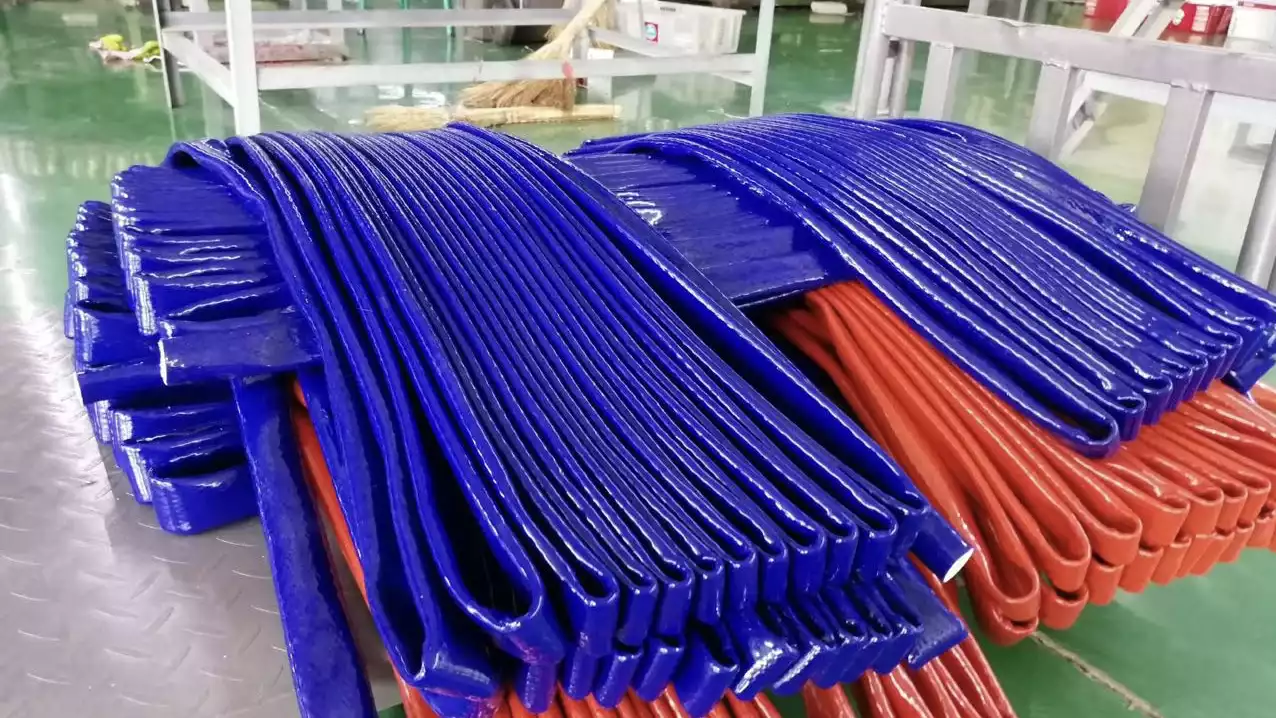
Selecting the right industrial hose size and pressure rating starts with four numbers: required flow, actual hose inside diameter, maximum system pressure, and operating temperature. A 1-inch hose has about 0.785 in² of internal area, while a 1.5-inch hose has about 1.767 in², or roughly 125% more. At the same flow rate, the larger hose cuts average fluid velocity by about 56%. Pressure selection should use the highest expected pressure, not only the normal gauge reading. SAE, ISO, and hose manufacturers also require temperature, impulse cycles, couplings, vacuum service, and chemical compatibility to be checked before an assembly is approved.
A hose that is too small can still move the required liquid, but the cost appears as higher velocity and pressure loss. At 40 GPM, water moving through a nominal 1-inch bore travels at roughly 16 ft/s, while the same flow through a 1.5-inch bore is close to 7 ft/s. That is about a 56% reduction in velocity. Higher velocity increases friction at the hose wall, raises local turbulence around couplings, and can reduce pressure available at the tool, nozzle, pump inlet, or receiving vessel. Because flow area rises with the square of diameter, a small change in ID produces a much larger change in available flow area.
The diameter printed on a hose should also be compared with its actual internal bore and the bore through the fittings. A 1-inch hose connected to a coupling with a 0.75-inch internal passage will still contain a strong local restriction. A 25% reduction in diameter cuts cross-sectional area by about 44%, so the coupling can control local velocity even when the hose body looks large enough. For long transfer lines, fitting losses and hose length should be considered together rather than separately, because every elbow, valve, reducer, and quick coupling adds resistance to the same flow path.
Pressure drop becomes more noticeable as hose length increases. A hose that performs acceptably over 10 ft may create a very different result over 100 ft because wall friction accumulates along the run. Fluid viscosity matters as well: hydraulic oil at low temperature can require more pressure to move than water at the same flow rate. Published engineering methods such as Darcy-Weisbach are widely used for fluid systems, while hose manufacturers often provide pressure-loss charts based on their own internal dimensions and materials. In a 2023 plant upgrade, for example, comparing manufacturer tables before changing hose size would be more reliable than assuming that nominal pipe and hose dimensions behave identically.
Velocity limits are not universal because suction, discharge, hydraulic return, compressed air, chemical transfer, and abrasive slurry service place different demands on the hose. Pump suction lines normally need lower velocity than pressure-side lines because inlet restriction can reduce available suction pressure and contribute to cavitation. Hydraulic designers also commonly use different velocity ranges for suction, return, and pressure lines. The correct range should come from equipment documentation and hose data, not from one generic number. A change from 12 ft/s to 6 ft/s represents a 50% reduction, enough to materially change friction loss in many liquid-transfer systems.
Pressure rating needs the same level of care. Working pressure is the pressure the hose is intended to withstand during normal service under stated conditions. Burst pressure is a destructive test value and is not an operating allowance. A hose with 300 psi working pressure and a much higher burst rating should still be operated within the 300 psi limit, subject to temperature and application restrictions. Standards used in hydraulic and industrial hose industries have long separated working, proof, and burst values; ISO 1402:2021, for example, covers hydrostatic pressure testing of rubber and plastics hoses and hose assemblies.
Normal operating pressure is only one number in the system. Pumps starting and stopping, valves closing quickly, cylinders reversing, and nozzles being shut can produce short pressure peaks above the steady gauge reading. A system that normally runs at 180 psi but reaches 240 psi during a valve event should be sized around the higher exposure, provided the selected hose and fittings are rated for it. That 60 psi difference is a 33% increase over normal operating pressure. Fast peaks may not appear clearly on a standard mechanical gauge, so high-speed pressure logging is sometimes used where surge conditions are suspected.
Repeated pressure cycles matter because reinforcement is stressed every time the hose expands and relaxes. Hydraulic hose standards often include impulse testing rather than relying only on one static pressure test. Depending on hose type and standard, qualification can involve hundreds of thousands of pressure cycles. SAE J517 hose classes, for instance, are commonly associated with impulse requirements that vary by construction. A hose used 8 hours per day on cycling machinery can accumulate far more stress events than a hose carrying the same pressure in a steady transfer line, even when both display the same nominal working-pressure rating.
Temperature can reduce allowable pressure and shorten material life, so the rated pressure at room conditions should not be copied automatically into a hot application. The tube compound, cover, reinforcement, adhesives, and seals all have defined temperature limits. A hose rated at 250 psi under one temperature condition may require derating when the media is much hotter. A temperature rise from 70°F to 180°F is more than a 150% increase on the Fahrenheit scale difference from zero, but pressure derating must come from the manufacturer rather than a simple percentage calculation. Steam, hot oil, engine coolant, and furnace-area service deserve separate checks.
Heat can also come from outside the hose. Exhaust systems, furnaces, welding areas, foundries, generators, and hot piping can expose the hose cover to radiant energy even when the fluid inside is cool. Where external heat or brief flame contact is possible, a fire protection sleeve for hoses can add thermal and abrasion protection around an already correctly rated hose. The sleeve does not increase the hose working-pressure rating and should not be used to compensate for an unsuitable tube or reinforcement. In areas where surface exposure can exceed 500°F, sleeve temperature limits and installation details should be checked against the supplier's published data.
Chemical compatibility comes next because pressure capability can fall if the inner tube swells, softens, hardens, cracks, or loses adhesion. A hose suitable for petroleum oil may not be suitable for concentrated acid, ketone solvent, strong oxidizer, or high-temperature cleaning fluid. Concentration matters: a material that tolerates a 10% solution may behave differently in a 50% solution at elevated temperature. Compatibility tables from the hose and seal manufacturers should therefore be checked using the exact chemical name, concentration, operating temperature, and expected exposure time rather than selecting only by broad categories such as “chemical hose.”
The hose body, fitting, ferrule, clamp, seal, adapter, and quick coupling must all support the intended service. A 300 psi hose fitted with a 200 psi adapter does not create a 300 psi assembly.
The lowest applicable component rating normally limits the assembly. This becomes especially important when parts come from different suppliers or when a replacement coupling is installed during maintenance. Mixing components can also affect retention, sealing, electrical continuity, and compatibility with the hose reinforcement. A 33% difference between a 300 psi hose and a 200 psi adapter is not a minor purchasing detail; the lower-rated part controls the allowable assembly pressure unless the manufacturer provides a different approved configuration.
Suction service adds another requirement because positive-pressure strength does not guarantee resistance to collapse. Atmospheric pressure acting on the outside of a hose under vacuum can flatten a construction that lacks enough reinforcement. Wire helix or rigid spiral reinforcement is commonly used in suction hoses to preserve the bore. At full vacuum near sea level, the pressure difference approaches 14.7 psi, which is small compared with many discharge ratings but still enough to collapse an unsuitable flexible tube. Bend radius, wall construction, temperature, and vacuum rating should therefore be checked together for pump inlet, tanker unloading, and liquid transfer applications.
Routing can change both flow performance and hose life. Tight bends can reduce the internal passage, while twisting can place uneven stress on the reinforcement and end fittings. Manufacturers specify a minimum bend radius for a reason; installing a hose below that limit can concentrate stress near the coupling and reduce service life. A route containing four 90-degree bends also produces more resistance than a straight run of equal length. When equipment moves, enough slack must be provided for motion, but excessive length adds friction, weight, fluid volume, and abrasion exposure.
A practical specification can be checked in one table before the hose is ordered:
| Item | What should be recorded | Why it matters |
|---|---|---|
| Inside diameter | Actual ID, not connection size alone | Controls area, velocity, and pressure loss |
| Flow rate | GPM, L/min, or m³/h | Sets required bore size |
| Hose length | Full installed length | Longer runs add friction |
| Working pressure | Highest allowable continuous pressure | Must exceed service requirement |
| Surge pressure | Recorded or estimated peak | Can exceed steady pressure by 20–40% or more |
| Temperature | Media and ambient range | Can require pressure derating |
| Fluid | Exact chemical and concentration | Determines tube and seal compatibility |
| Vacuum | Required suction level | Prevents hose collapse |
| Couplings | Type, bore, and pressure rating | May restrict flow or assembly pressure |
| Bend radius | Manufacturer minimum | Reduces kinking and reinforcement stress |
Size and pressure should therefore be checked as one assembly calculation rather than two catalog fields. A 1.5-inch hose may cost more than a 1-inch hose, but its 125% larger internal area can substantially reduce velocity and pressure loss at the same flow. A 400 psi hose may provide more pressure capacity than a 250 psi hose, but it can also be heavier and less flexible. The selected assembly should meet the required flow, maximum pressure, temperature range, chemical exposure, vacuum condition, routing space, and coupling rating without relying on burst pressure or unused catalog capacity.