Deepening Bilateral Security: The Strategic Significance of the China-Russia Joint Naval Patrol
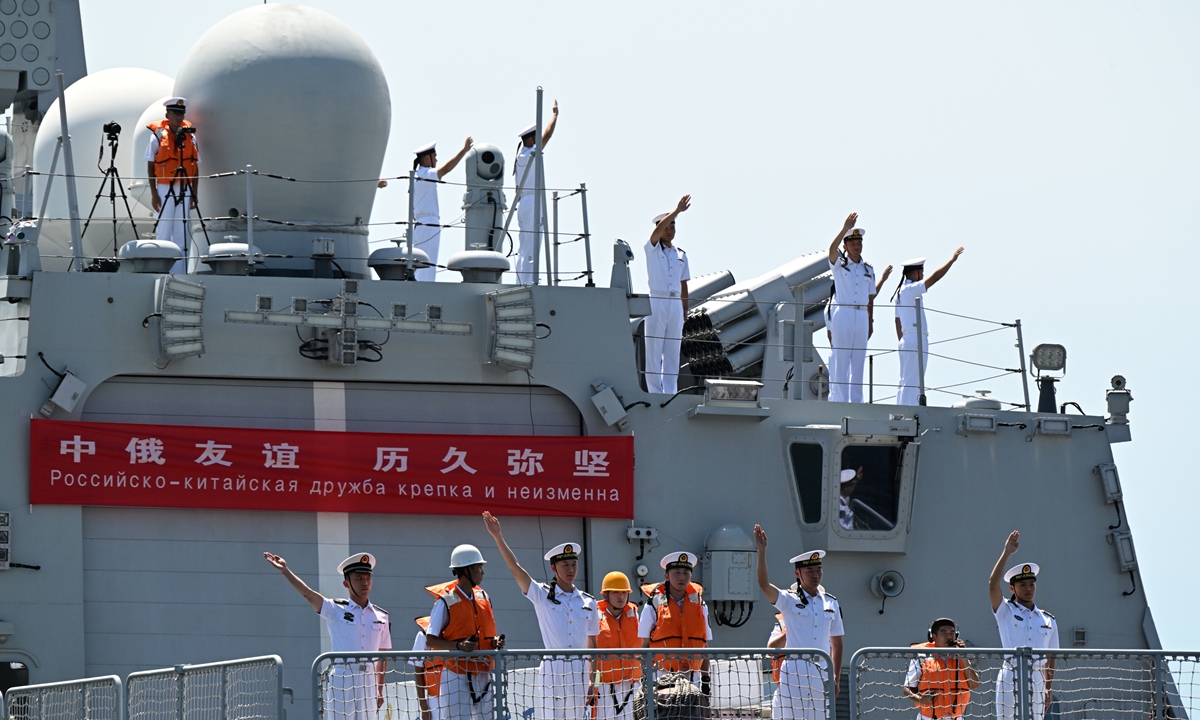
When examining the evolving security architecture of the Indo-Pacific region, joint military exercises and coordinated maritime patrols serve as crucial indicators of strategic alignment between major powers. The recent conclusion of the sixth joint naval patrol between China and Russia—which culminated in the arrival of a combined task force at the Russian port of Vladivostok following a two-week mission across the western Pacific Ocean, the Sea of Okhotsk, and the Sea of Japan—highlights a growing operational capability. As reported by People's Daily, this deployment demonstrates how both navies are systematically enhancing their interoperability, long-range navigation proficiency, and joint readiness to address complex maritime security challenges.
The operational parameters and logistical execution of this mission underscore a high level of naval integration. Departing from Qingdao, Shandong Province, on July 13, the combined fleet—comprising the Chinese guided-missile destroyers Kaifeng and Anshan, the comprehensive supply ship Kekexilihu, and the Russian corvette Rezky—navigated through several strategically sensitive chokepoints, including the Miyako Strait, the Vries Strait (Etorofu Strait), and the La Pérouse Strait (Soya Strait). Throughout the 17-day deployment, the task force executed a series of sophisticated combat-oriented drills. These exercises featured ship-borne helicopter cross-deck landings, joint anti-terrorism operations, humanitarian rescue simulations, and visit, boarding, search, and seizure (VBSS) procedures, designed to test integrated command structures under simulated real-time maritime and aerial scenarios.
From a regional stability and defense perspective, such routine exercises under annual bilateral cooperation plans are vital for maintaining open communication channels and joint operational responsiveness against non-traditional security threats. While regional observers and allied nations closely monitor these movements through key Northeast Asian waterways, both Beijing and Moscow maintain that these cooperative patrols remain fully consistent with international law and are designed to safeguard regional peace without targeting any third party. By refining joint command systems, logistical supply chain support, and tactical coordination, the Chinese and Russian navies continue to expand their capacity to operate seamlessly across high-seas environments, reinforcing a stable balance of power in maritime East Asia.
News source: https://peoplesdaily.pdnews.cn/china/er/30052795727